How to Measure Your PD at Home (Step-by-Step Guide)
Disclosure: This post contains affiliate links. If you click one of these links and make a purchase (for example, on Amazon), we earn a commission at no extra cost to you. As an independent UK price comparison service, we only recommend products and retailers we genuinely trust.
If you’ve ever tried to buy glasses online and hit a wall when asked for your PD, you’re not alone. The good news is you can measure PD at home in under two minutes with nothing more than a ruler and a mirror. Pupillary distance, or PD, is one of those measurements that opticians don’t always include on your prescription, but online retailers need it to make your lenses correctly
What Is PD and Why Does It Matter?
Pupillary distance is the measurement in millimetres between the centres of your pupils. It tells the lens maker exactly where to position the optical centre of each lens for your prescription
Get it wrong and your glasses can cause headaches, eye strain, or just feel ‘off’, even if the prescription itself is correct.
PD is usually between 55mm and 75mm for adults, with the average being around 63–64mm. It can be given as a single measurement (e.g. 64mm) or as two separate measurements for each eye (e.g. 32/32mm).
Can You Ask Your Optician for Your PD?
Yes, and you should try this first. Under UK law (specifically the Opticians Act 1989), opticians must legally give you a copy of your prescription immediately after your eye test. However, because Pupillary Distance is technically classified as a “dispensing measurement” rather than a clinical part of the prescription, they aren’t strictly mandated to write it down for you automatically.
The good news is that most high-street opticians will still give it to you if you ask for it politely at the end of your test, though some may charge a very small fee to measure it outside of a frame purchase.
Simply call or email your optician and ask them to add your PD to your records. Most will do this without any fuss, and it’s the most accurate measurement you’ll get.
If they won’t provide it, or if you’d rather measure it yourself from the comfort of home, here’s exactly how to do it.
What You’ll Need to Measure PD at Home
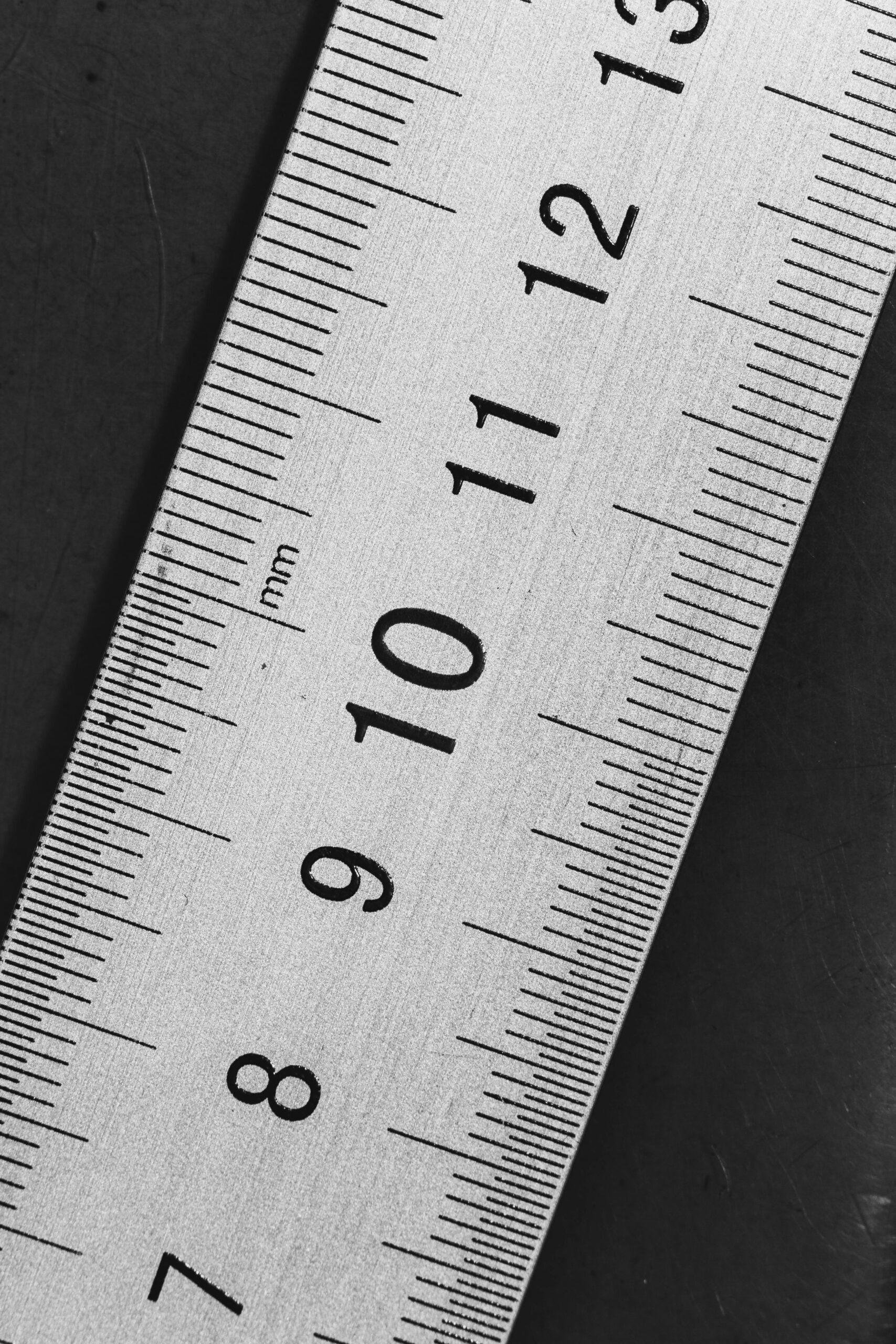
- A millimetre scale optical ruler (You can pick up a pack of these on Amazon for a few pounds if you don’t have a precise one handy).
- A mirror
- A friend (optional but helpful)
Method 1: Measuring Your Own PD With a Mirror
This method works well if you don’t have anyone to help you.
Step 1 – Stand about 20cm (8 inches) away from a mirror in a well-lit room. Keep your face straight and look directly at your reflection.
Step 2 – Hold a millimetre ruler flat against your brow, just above your eyes. Position it so the zero is roughly in the centre.
Step 3 – Close your right eye. Line up the zero mark on the ruler with the centre of your LEFT pupil.
Step 4 – Without moving the ruler, open your right eye and close your left eye. Note the millimetre reading at the centre of your RIGHT pupil.
Step 5 – That number is your PD. Measure it three times and take the average to make sure it’s accurate.
Method 2 – Measuring With a Friend
This method tends to be more accurate as it removes the risk of your eyes moving when you switch between them.
- Sit down in a well-lit room and look straight ahead at a point in the distance (not at your friend).
- Ask your friend to hold a millimetre ruler flat across your brow, just above your eyes.
- Your friend closes one eye and lines up the zero mark on the ruler with the centre of your left pupil.
- Keeping the ruler still, they then note the millimetre reading at the centre of your right pupil.
- That number is your PD. Repeat three times and average the results.
How to Measure a Split PD (Monocular PD)
Some online retailers ask for a split PD, a separate measurement for each eye from the centre of your nose. This is more precise and particularly useful for varifocal lenses.
- Position the ruler as above, but this time line up the zero mark with the centre of your nose (the bridge).
- Note the measurement to the centre of your right pupil – this is your right PD.
- Note the measurement to the centre of your left pupil – this is your left PD.
The two numbers should add up to your total PD. It’s common for them to be slightly different, for example 31/33mm – which is completely normal.
Tips to Measure PD at Home Accurately
- Always measure in good lighting – natural daylight is best.
- Keep your head straight and look at a distant point, not at the ruler.
- Measure at least three times and take the average to lock in accuracy.
- If measuring yourself in a mirror, make sure you’re looking at your own reflection, not at the ruler itself.
- Wear your glasses if you normally do – you can carefully measure over the top of them. (If you find it tricky to hold a loose ruler steady, consider picking up an all-in-one eyeglass repair kit on Amazon. They cost under ten pounds, come with a mini millimetre ruler, and include spare nose pads and screws for future quick fixes).
What If My PD Measurement Is Slightly Off?
For single vision lenses, a small margin of error (1–2mm) is usually fine. Most people won’t notice any difference.
For varifocal lenses, accuracy is more important. If you’re buying varifocals online for the first time, it’s worth getting your PD measured professionally – most opticians will do this for free or for a small fee.
Which Retailers Need Your PD?
Online retailers need your PD because they’re making your lenses remotely without being able to fit the glasses to your face. High street retailers like Specsavers and Vision Express measure your PD in store as part of the fitting process, so you don’t need to provide it yourself.
If you’re buying online and don’t have your PD, use GlassesCompared to see which retailers can help you measure it, or which offer home measurement services.
Ready to Buy?
Now you’ve got your PD sorted, you’re ready to buy glasses online with confidence.